
Home/ Workbooks/ The Anxious Teen — A Parent's Workbook
Withorn Parenting · Book 1
The Anxious Teen — A Parent's Workbook
CBT Tools to Help Without Hovering — Calm the Alarm, Cut the Avoidance, Keep the Relationship
You cannot make them do the worksheets. You can change your half of the interaction.
Slammed doors, Sunday stomachaches, skipped parties, midnight Googling: parenting an anxious teen is exhausting in its own way. Much advice asks parents to do the impossible and persuade a teenager to cooperate. This workbook takes a different starting point. Research consistently shows that when parents change their own responses, anxious teens can improve, including teens who refuse help. This is your part of the work, in fill-in form.
Inside this book
- How the teen alarm system works, and the avoidance loop that keeps it going
- The accommodation map: what anxiety currently gets from you, and gradual ways to reduce it without requiring teen buy-in
- A one-sentence formula, validation plus confidence, to replace the reassurance treadmill
- Communication that makes space for connection: side-by-side rituals, fewer questions, and late-night availability
- Your own alarm: parent thought records, a rescue log, and ways to model recovery out loud
- Working with school, the attendance-spiral protocol, and a full chapter on professional help
- An eight-week family plan with observation logs, storm logs, weekly reviews, and fridge-card scripts
Educational self-help for parents, not therapy or diagnosis, with clear guidance on when professional help is the right next step.
- Author
- Andy Withorn
- Series
- Withorn Parenting · Book 1
- Written for
- Parents of anxious teenagers
- Editions
- Paperback
- Trim size
- 8.5 × 11 in
- Publisher
- Tsunami Reading
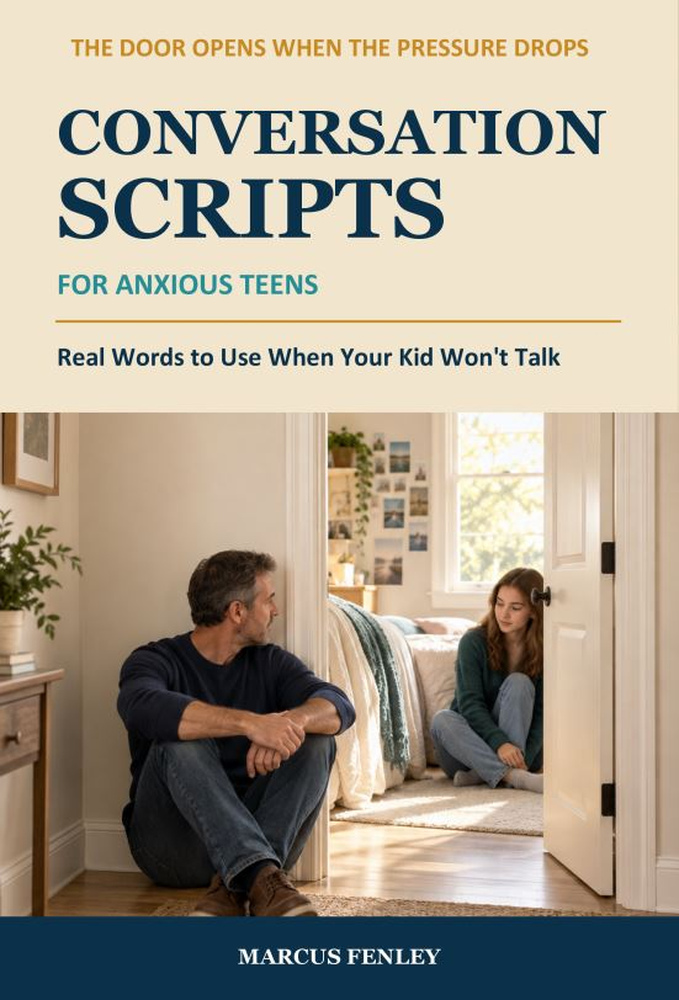
Reads well with
Conversation Scripts for Anxious Teens
Real Words to Use When Your Kid Won't Talk — A Parent's Guide to Active Listening, Setting Boundaries, and Rebuilding the Parent-Child Relationship